

As a reputable supplier of auxiliary machinery, I understand the challenges associated with excessive noise generated by these essential industrial tools. In industrial settings, the noise from auxiliary machinery can not only cause discomfort to workers but also lead to long - term hearing problems and even violate environmental noise regulations. Therefore, reducing the noise of auxiliary machinery is not only a matter of worker well - being but also a necessity for compliance and overall operational efficiency. In this blog, I will share some effective strategies to address this issue.
Understanding the Sources of Noise in Auxiliary Machinery
Before we can effectively reduce the noise, it is crucial to understand where the noise comes from. Generally, the noise in auxiliary machinery can be classified into three main sources: mechanical noise, aerodynamic noise, and hydraulic noise.
Mechanical noise is often caused by the vibration of moving parts such as gears, bearings, and shafts. For example, in a Plastic Products Crusher, the rotating blades and the impact of plastic materials against the crushing chamber generate significant mechanical noise. Poorly lubricated parts, misaligned shafts, or worn - out components can exacerbate this type of noise.
Aerodynamic noise occurs when air moves at high speeds around the machinery. In equipment like Raw Materail Auto Loader, the air flow created by fans or blowers can produce a high - pitched whistling or roaring sound. This noise is mainly due to turbulence and pressure fluctuations in the air stream.
Hydraulic noise is related to the flow of hydraulic fluids in hydraulic systems. In some auxiliary machinery, hydraulic pumps, valves, and cylinders are used to provide power and control. The sudden opening and closing of valves, as well as the cavitation (formation and collapse of vapor bubbles) in the hydraulic fluid, can cause loud noise.

Strategies for Reducing Noise
1. Equipment Design and Selection
- High - Quality Components: When designing or selecting auxiliary machinery, using high - quality components can significantly reduce noise. For instance, choosing low - noise bearings can minimize the mechanical noise generated by rotating parts. High - precision gears with proper tooth profiles can also reduce gear - meshing noise.
- Aerodynamic Design: For machinery with air - moving components, optimizing the aerodynamic design can reduce aerodynamic noise. This can involve using streamlined shapes for fans and ducts to minimize turbulence. For example, in the design of a Raw Materail Auto Loader, a well - designed air intake and exhaust system can reduce the noise associated with air flow.
- Vibration Isolation: Incorporating vibration - isolation materials and structures into the machinery design can prevent the transmission of mechanical vibrations to the surrounding environment. Rubber mounts or springs can be used to isolate the vibrating parts from the main frame of the machine. In a Plastic Products Crusher, installing vibration - isolation pads under the crusher can reduce the noise transmitted through the floor.
2. Maintenance and Lubrication
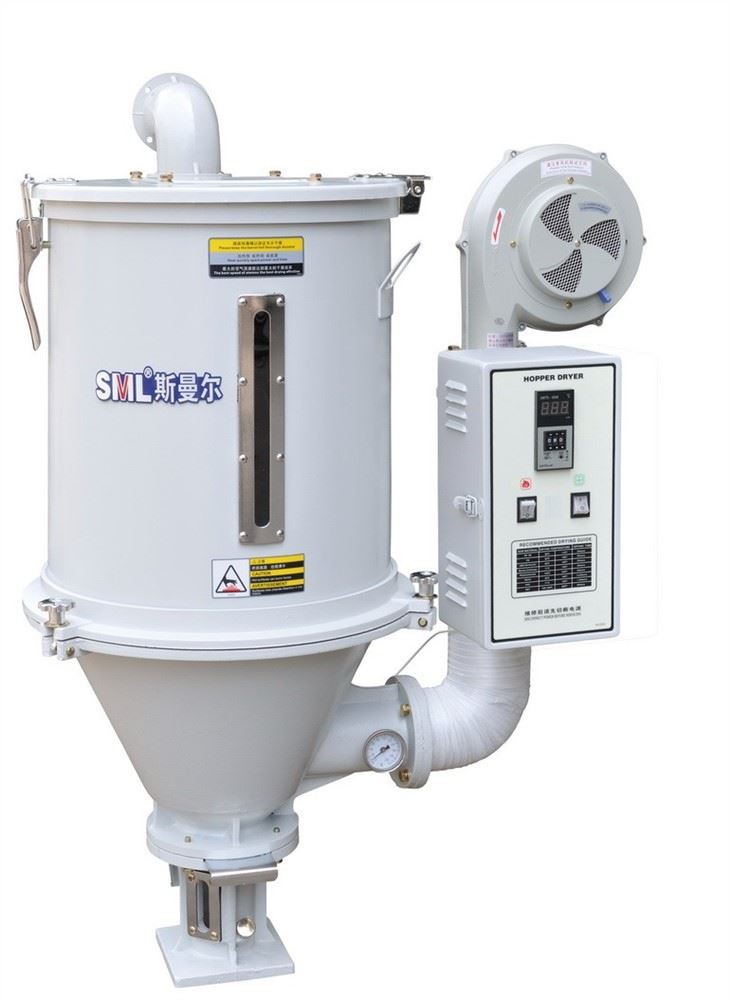
- Regular Maintenance: Scheduled maintenance is essential for keeping the auxiliary machinery in good working condition and reducing noise. This includes checking and tightening loose bolts, inspecting and replacing worn - out parts, and ensuring proper alignment of shafts and components. For example, in a Hopper Dryer, regular inspection of the heating elements, fans, and conveyor belts can prevent abnormal noise caused by component failure.
- Proper Lubrication: Adequate lubrication of moving parts can reduce friction and wear, thereby reducing mechanical noise. Different types of machinery require different lubricants, and it is important to use the correct lubricant and apply it at the appropriate intervals. For gears and bearings in auxiliary machinery, using high - quality lubricants can significantly reduce noise and extend the service life of the components.
3. Noise Enclosures and Barriers
- Enclosures: Installing noise enclosures around the auxiliary machinery is an effective way to reduce noise emissions. These enclosures are typically made of sound - absorbing materials such as fiberglass or acoustic foam. They can be custom - designed to fit the specific shape and size of the machinery. For example, a Plastic Products Crusher can be enclosed in a sound - proof cabinet to contain the noise within a limited space.
- Barriers: In addition to enclosures, noise barriers can be used to block the propagation of noise. These barriers can be placed between the machinery and the workers or the surrounding environment. They can be made of concrete, steel, or other dense materials. For an industrial workshop with multiple auxiliary machines, installing noise barriers along the perimeter of the workshop can reduce the noise level in the adjacent areas.
4. Operational Adjustments
- Speed Control: Adjusting the operating speed of the auxiliary machinery can sometimes reduce noise. In some cases, running the machine at a lower speed can significantly decrease the noise level without sacrificing too much productivity. For example, in a Raw Materail Auto Loader, reducing the speed of the conveyor belt or the fan can reduce the aerodynamic noise.
- Load Management: Ensuring that the machinery is not overloaded can also help reduce noise. Overloading can cause excessive stress on the components, leading to increased vibration and noise. By properly managing the load on the Hopper Dryer or other auxiliary machinery, the noise level can be kept under control.
Implementing Noise Reduction Measures in a Real - World Setting
As an auxiliary machinery supplier, I have helped many customers implement noise reduction measures in their factories. One of our clients, a plastic processing plant, was facing significant noise issues from their Plastic Products Crusher and Raw Materail Auto Loader.
First, we conducted a detailed noise assessment of their machinery to identify the specific sources of noise. We found that the crusher had worn - out bearings and a misaligned shaft, which were causing excessive mechanical noise. The auto - loader had a poorly designed air intake system, resulting in high - level aerodynamic noise.
We recommended several measures to address these issues. For the crusher, we replaced the worn - out bearings and realigned the shaft. We also installed vibration - isolation pads under the crusher to reduce the noise transmitted through the floor. For the auto - loader, we redesigned the air intake system to improve the air flow and reduce turbulence. Additionally, we installed a noise enclosure around the auto - loader to contain the noise.

After implementing these measures, the noise level in the plant was significantly reduced. The workers reported a more comfortable working environment, and the plant was able to comply with the local environmental noise regulations.
Conclusion
Reducing the noise of auxiliary machinery is a multi - faceted challenge that requires a comprehensive approach. By understanding the sources of noise, implementing proper design and selection, conducting regular maintenance, using noise enclosures and barriers, and making operational adjustments, we can effectively reduce the noise emissions from auxiliary machinery.
As a supplier of auxiliary machinery, I am committed to providing high - quality products and solutions to help our customers address noise issues. If you are facing noise problems with your auxiliary machinery or are interested in learning more about our products, such as Plastic Products Crusher, Raw Materail Auto Loader, and Hopper Dryer, please feel free to contact us for further discussion and procurement.
References
- Blau, Peter J. "Friction, Wear, Lubrication: A Practical Guide for Industry." ASM International, 2001.
- Harris, T. A., & Kotzalas, M. N. "Rolling Bearing Analysis." Wiley, 2007.
- Zucrow, M. J., & Hoffman, J. D. "Gas Dynamics." Wiley, 1976.


