

Blowing Molding Machine
We specialize in manufacturing and exporting injection molding machines that have a shot weight of 60-10000 grams and a clamping force of 60- 1600 tons.
Why Choose Us
Quality Guaranteed
The most notable is the ISO9001 Quality Certificate (Registered by Germany TUV Management Service). Our company is accredited for meeting international standards in management responsibility, quality control, design control, process control, customer service, and other key criteria.
Global Sales Network
Our machines are sold to more than 20 provinces in China and exported to the Middle East, Southeast Asia, Russia, Middle Asia, and Africa.
Rich Experience
We have decades of knowledge and experience to execute precise manufacturing, our high-quality SZ series automatic computerized injection molding machines and their downstream equipment using imported hydraulic and electrical seals.
Wide Product Range
Our products include general injection molding machines, servo injection molding machines, bottle cap injection molding machines, bucket/crate injection molding machines, blow molding machines, plastic mould, etc.
-
 Medicine Bottle Injection Blowing MachineMedicine Bottle Injection Blowing Machine is suitable for producing medicine bottles of differentAdd to Inquiry
-
 Plastic Bottle Extrusion Blowing MachineIf you are looking for a blow molding machine with excellent quality and stable performance,Add to Inquiry
-
 Cosmetic Bottle Blowing MachineA bottle blower is a piece of automated high-speed equipment that produces plastic bottles ofAdd to Inquiry
-
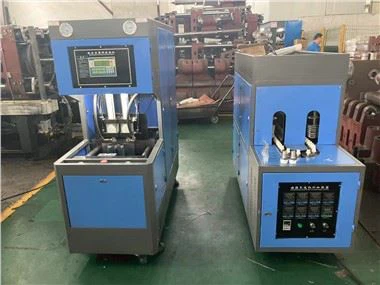 Semi Automatic Injection Blowing Blow Molding MachineA semi-automatic bottle blowing machine is a blow molding machine. A simple explanation is aAdd to Inquiry
-
 Plastic Barrel Extrusion Blowing MachinePlastic Barrel Extrusion Blowing Machine is a product that is widely used in the plastic productsAdd to Inquiry
-
Cosmetic Bottle Blowing MachineCosmetic Bottle Blowing Machine is mainly used to blow plastic particles or finished preforms intoAdd to Inquiry


- Tel: +86-512-58451000
- Mob: +86-13601562785
- Email: cch@shenzhoumac.com
- Add: Fenghuang Town, Zhangjiagang City, Jiangsu Province, P.R.China
Bowing Molding Machine is a plastic processing machine. After the liquid plastic is sprayed out, the plastic body is blown and attached to the mold cavity of a certain shape by using the wind force blown out by the machine, so as to make the product. This machine is called blow molding machine. The plastic is melted and quantitatively extruded in the screw extruder, then formed through the mouth film, cooled by air ring blowing, then pulled by the tractor at a certain speed, and wound into a coil by the winder.
Bowing Molding Machine mostly adopts frequency converter, and the energy-saving way is to save the remaining energy consumption of the motor. It has the advantages of high thickness, corrosion resistance and wear resistance. The lifting unit adopts square frame platform structure, and the lifting frame height can be automatically adjusted according to different technical requirements. The unloading equipment adopts peeling rotating equipment and central rotating equipment, and the torque motor is used to adjust the smoothness of the film for easy operation.
Definition of Blowing Molding Machine
Of the many different machines used for manufacturing products, the blow molding machine is one of the most fascinating and useful. Blow molding machine also known as hollow blow molding, is a kind of rapid development of plastic processing methods. A blow molding machine is a machine that blows the plastic to the mold cavity with a certain shape using wind when the liquid plastic starts to spry out.
Working Principle of Blowing Molding Machine
Parison Extrusion
The first step in blow molding is the extrusion of a parison. In this process, plastic resin, in the form of small pellets or granules, is melted and forced into a hollow tube shape through an extruder. The extruded plastic tube, still hot and malleable, is then captured by the machine’s clamping unit.
Moulding
Once the parison is securely held in place, the mold closes around it, creating a cavity in the desired shape of the final product. The machine then uses compressed air to blow the parison, expanding it against the walls of the mold. The hot plastic conforms to the exact shape of the mold, taking its form.
Product Ejection
After the plastic has cooled and solidified within the mold, the machine opens the mold and releases the finished product. The product is carefully ejected, and the process is ready to repeat for the next cycle.
Benefits of Blowing Molding Machine
It is a Revolutionary Form of Technology.
Blow molding has revolutionized the industrial sector by allowing companies to use it widely to meet consumers’ needs for plastic ware. As you can see, this plastic production method brought about a lot of production perks, such as quick manufacturing and high volume outputs, which means that we are able to produce a lot of plastic containers.
It Comes with Low Costs.
With a focus on extrusion blow molding, it uses a lower level of pressure, which means that machinery costs are low, making it easier and more cost-efficient to mold external threads or open-ended and large parts, which can be split by opening a closed molding. Moreover, the use of this technology will allow you to reduce labor costs.
It Allows for Multiple Methods of Production.
As already implied, blow molding uses various methods to create final products. For one, extrusion blow molding works similarly as traditional glass blowing, where materials are blown through a long tube to work on the end, which can create products, such as light bulbs. As for injection blow molding, it is employed to produce receptacles in huge quantities, where melted polymers are injected into the blow mold, instead of being blown through by air. Now, this technology is continuing to develop to improve such production methods, using tweaks in design and moving towards pure automation.
It is Versatile.
The versatility of blow molding is a big advantage and a reason it revolutionized a number of industries. The diverse number of customizable bottles, containers, and other products makes blow molding especially attractive to food suppliers, medical and pharmaceutical companies, and more. Blow molding also provides a wide range of resins and colors to choose from high-density and low-density polyethylene (HDPE and LDPE) to polypropylene (PP) to engineering resins such as K-Resin, PETG, and Polycarbonate.
Types of Blowing Molding Machine

Injection Blow Molding Machine
In injection blow molding, a blow or core rod is used throughout the process. First a parison is injected into a split mold cavity around the rod. The parison that is formed looks similar to a test tube. The core rod transfers the parison to the blow mold machine where forced air creates the final shape. The rod then transfers and extrudes the finished product from the machine.
Extrusion Blow Molding Machine
Extrusion blow molding can be continuous or intermittent. In continuous extrusion blow molding, a parison will be constantly fed into the mold and each form will be cut off with a blade as it forms. Intermittent extrusion blow molding expels each new plastic from the metal mold when it is cooled and the parison is fed into the mold only after the preceding parison is expelled. Extrusion blow molds are generally much less expensive than injection blow molds and can be produced in a much shorter period of time. Extrusion blow molding is appropriate for smaller runs. Advantages include cost savings on tooling and shorter production time while disadvantages usually include lesser control of wall thickness and greater amount of scrap material.


Injection Stretch Blow Molding Machine
Injection stretch blow molding combines the injection molding and blow molding processes. The plastic is first molded into a solid preform, to create a threaded bottle neck. Once the preform cools it is fed into a stretch blow mold machine. The preform is then reheated using an infrared heater and blown into a plastic bottle with forced compressed air.
Applications of Blowing Molding Machine
Automotive Industry – Many of the parts storing fluids use blow molding. Cooling system overflow containers, windshield washer fluid bottles, and even fuel tanks are commonly made with blow molding.
Appliance Components – Your major appliances at home include reservoirs that contain fluids and help to wash your clothes and dishes. These are commonly made via blow molding.
Medical Supplies and Parts – If you’ve been to a health clinic, your dentist, or to visit your family doctor you can quickly start counting how many hollow containers are used. Spray bottles, water bottles, and storage containers line the cabinets. All of those are quickly made with blow molding.
Children’s Toys – If you have a small child, you could quickly count how many hollow lightweight toys they have. Blocks and squeeze toys are common uses for blow molding.
Lawn And Garden Items – You could almost put lawn and garden into the automotive and bulk container categories as it uses bottles for liquid products and uses blow molding for mowers and power equipment for fuel tanks, oil storage and distribution.

Marine
Products that go in the water need to be buoyant, and blow molding makes hollow products with ease. Reservoirs, buoys, and other items are commonly made with blow molding.
Packaging
Customized packaging with Polystyrene keep products safe, and blow molding makes hard to create shapes with ease. Reservoirs, buoys, and other items are commonly made with blow molding.
Sporting Goods
A common blow molded product in sporting goods is a plastic bat, a plastic ball, or another hollow piece of equipment.
Industrial Bulk Containers
Think of larger fluid containers like barrels to transport and store water, oil, or anything else liquid. Those are made with blow molding.
The Feed from the Extruder: Extruder is simply a machine which consists of cylinders and barrels where the plastic is to be heated up. The feed from the extruder is given as an input into the Blow Molding Machine.
Melted Plastic: Melted plastic acts as a medium for the creation of plastic hollow components.
Extruder Head: Melted plastic has to be sent to the extruder head so that it can be passed through various other channels.
Air Tube: The air tube is used to pressurize the air when the molted plastic enters into the mold cavity [Link to Science Direct] and it is about to bulge.
Parison: It is a Tubular shape of hot plastic with a hole at one end through which compressed air can pass.
Mould: Mould cavity consists of patterns where molten plastic is to be deposited and solidification takes place and after solidification, final product is obtained
The Blow Molding Process of Blowing Molding Machine
Blow molding is a fairly straightforward process that includes melting, homogenizing, extruding, molding (blowing), cooling, and ejection. Different manufacturing plants can employ additional processes such as additional cooling or heating cycles and additives and colorants compounding. These additional processes depend on the design and intended application of the final product.
Plastic Resin Feeding or Charging: The first step in the blow molding process is plastic feeding. This is done by conveying the plastic pellets into the extruder hopper. Vacuum pumps draw pellets from big bags or bulk containers and transfer them into the raw material silos or hoppers. A rotary feeder at the bottom of the silo controls the rate of feeding into the plastifier or extruder. Compressed air is then used to convey the stored pellets to the extruder hopper. In other systems, plastic pellets from big bags or bins can be vacuum conveyed directly to the extruder hopper without the need for a separate conveying air system.
Plasticizing or Melting: As the plastic resin enters and goes through the extrusion machine, it is melted by continuous kneading and heating. Electric heating elements or heating bands are wrapped around the extruder barrel to provide heat for melting the polymer. The extruder screw has different sections that serve a specific purpose. These are feeding, compressing, and metering. The extruder screw is designed to provide sufficient shearing and compression to homogenize and extrude the plastic.
Parison Extrusion or Preform Injection: This process is the preparation of the parison or preform to be inflated. This is done by extruding the plastic through free extrusion or injection into a preform mold.
Sealing or Clamping: Sealing or clamping involves a split die that captures the preform. The ends of the parison (extrusion blow molding) are sealed except for one hole, typically the container opening, where the compressed air will be injected.
Inflation or Blow Molding: This step is where the plastic takes its form. Compressed air is introduced inside the preform. This inflates the preform until it is molded according to the profile of the die.
Cooling and Ejecting: The next step is the cooling process. Typically, as the plastic touches the die, it cools at a predefined rate which stabilizes the dimensions of the product. After cooling, the mold opens and ejects the product.
Trimming: Flashing is generally evident in extrusion blow molding. Most blow molding machines have auto deflashing features as the dies clamp the preform. But in some instances, flash is present at the top and bottom parts of the product, especially at the opening where compressed air is injected. This excess material is trimmed by a rotating knife. To minimize wastage, some systems collect the excess materials, grind them, and feed them back to the extrusion machine.
Leak Test: This is the typical quality control method used in manufacturing bottles or packaging materials. In this step, either vacuum or compression is generated inside the container. The machine will then check if air enters or escapes the container by monitoring the pressure. If a leak is sensed from the container, it is rejected and fed back into the system.
Other Secondary Processes and Packaging: Secondary processes include labeling, marking, and printing. After completing the secondary processes, the products are packed and distributed to manufacturers or end consumers.
Maintenance Tips for Blowing Molding Machine
Maintenance Plan (Daily)
Check the moving parts, clean up the sundries immediately, and wipe the straight line navigation at the same time.
Check whether the gas, power, water and oil level of gasoline tank are normal.
Check whether there is water in the air compressor and air filter, the water must be discharged if there is water.
Check whether there is enough oil in the oil cup of air filter.
Check whether the heating ring, heating plate and heating temperature are normal.
Check the position of the bush and pin, and avoid biting to lock after switching on.
Maintenance Plan (Weekly)
Check the hydraulic oil level of the oil tank. If it is insufficient, please add it in time.
Check the smooth operation about every part.
Clean all limit switches, proximity switches and touch blocks to avoid switch failure.
Check whether the oil level of gear box is normal.
Clean the perforated plate at the front end of the barrel and replace the filter screen (note: this is an added part, and some models may not be equipped with it).
Use the automatic lubrication pump to add lubricating oil at the moving parts once, and at the same time use the gold gun to inject butter at the grease nipple of the slider.
Maintenance Plan (Monthly)


Check and clean the absorption and return oil filters in the oil tank and the filter at the oil filler.
Check whether the lubrication of the rail and ball screw is good and the movement is smooth.
Check whether the functions of all control switches and key-press on the system panel and operation panel are normal.
Check the cutting knife condition (note: only for continuous extrusion type)
- Cold Cutting Type: check whether the cutting edge of the blade is damaged; whether the locking screw of the blade and prepress plate is loose, and whether the synchronous gear and rack move smoothly.
- Hot Cutting Type: check whether the high-voltage wire is worn and whether the holder screw of the blade is loose.
Maintenance Plan (Quarterly)
Check the tightening of bolts of main components.
Check whether the contacts, joints, sockets and switches in the electrical cabinet are loose, and replace them in time if there is any problem.
Check whether there is any collision on the linear guide rail surface and whether the effect of the dustproof sheet of the slide block is good.
Maintenance Plan (Yearly)
01
Check for wear and abnormal sound of linear guide rail and screw mandrel. If there is any problem, please replace it in time.
02
According to the gear oil model on the gear box date plate, replace the gear oil in the gear box, dredge the oil pipes in the gear box, and test the wear condition of the gear for maintenance or replacement.
03
Replace the hydraulic oil, and clean, dredge or replace the oil pipes in the hydraulic station.

Factors to Consider When Selecting Blowing Molding Machine
Capacity
The production capacity is an important factor for blow molding machines. Customers have to choose machines which have a capacity which matches according to their production capacity. After selecting the machine, the machine should have 25 percent more capacity and with this is how a business grows.
Automation
In today’s market, the different types of machines come with the latest features with more automation. The automation saves more money and time in business. Whatever the automation machine used wired relay logic or a PLC control, this makes the production smooth.
High-Cost Performance
This is a key point of blow molding machine selection. We choose machines not to ignore product performance in order to save money. You’d better choose one with high-cost performance. Many customers feel a heartbeat at the sight of low prices. The result shows that most of them suffer losses. Because the supplier channel is different, the supplier is good, of course, the cost will be high. But you’ll save trouble because the machine has less trouble, more power saving. You spend less energy on the machine. In the long run, you’ll save money.
Certification
Our company is accredited for meeting international standards in management responsibility, quality control, design control, process control, customer service, and other key criteria.

Our Factory
Located in Zhangjiagang City of China, our company is near many big cities of Shanghai, Nanjing, Suzhou, Wuxi, and Nantong, with convenient traffic.


Ultimate FAQ Guide to Blowing Molding Machine
Q: What are the main differences in the product examples between extrusion blow molding and injection blow molding?
The Extrusion Blow Moulding process come out by parison and then blow. Whereas the Injection Blow Moulding process by injection and blow, then eject as the final output.
● Mold Cost Difference
The mold price for Extrusion Blow Molding and injection mold is a big difference.
● Production Time Difference
Time for Extrusion Blow Moulding Process is slower whereas the injection moulding process is faster.
● Scrap / Flash Difference
More scraps with Blow Molding Products or Examples are produced when using Extrusion Blow Molding.
● Flexibility of Product Thickness Difference
The thickness of Extrusion Blow Moulding Products and Examples can be adjusted, but it is limited in injection moulding.
Q: What are the most popular plastic materials molded in the blow molding machines?
Q: What should I do with the bottom of the bottle blown by the bottle blowing machine?
Q: What should I do if the bottle’s mouth-blown by the bottle blowing machine is deformed?
Q: How can the blowing machine be operated, and which accessories should be checked?
Q: How much chiller is needed for the carbonated beverage bottle blowing machine to blow the bottle?
Q: What is the highest temperature resistance of the non-crystalline bottle mouth of the hot-filling bottle blowing machine? How many grams of preforms are needed?
Q: What is the most common type of blow molding process?
Q: What is extrusion moulding process?
Q: What is stretch blow molding?
Q: Can blowing molding machines create custom designs?
Q: How long does it take to create a product using a blowing molding machine?
Q: How can blowing molding machines be optimized for maximum efficiency?
Q: Can products made using a blowing molding machine be recycled?
Q: Can blowing molding machines be used to create large products?
Q: What safety measures should be taken when using a blowing molding machine?
Maintaining a work environment void of oil or grease
Never reaching under or over the machine guards
Never wearing anything that dangles, such as necklaces, braces, watches, rings, or loose clothing to prevent limbs from getting trapped or pulled into the machine
Never disconnecting or by-passing the guard’s safety switches
Using only quality materials specified for this blow molding process
Never climbing between the tie-bars during hydraulic pump operation
Always wearing protective gloves when adjusting manifolds or components on the hot die head
Never reaching into the machine’s throat during granulator operation
Knowing the location of the nearest fire extinguisher
Always wearing approved ear protection to block out noise
Never using steel tools on the parting line, mold cores, and cavities
Knowing the location of the nearest first-aid kit
Always wearing safety glasses and steel-toed boots
Never standing directly below a mold suspended in the air
Regularly examining electrical cords and air hoses
Using the proper safety equipment when lifting heavy workpiece material
Never operating an extrusion blow molding machine without authorization and appropriate training
Q: Can blowing molding machines be automated?
Q: What are the environmental impacts of blowing molding machines?
Q: How can the efficiency of a blowing molding machine be measured?
Q: What is the average lifespan of a blowing molding machine?
Q: What are the machines used for the blow molding process?
Q: What is the blow molding process with blow molding machine?
We're well-known as one of the leading blowing molding machine manufacturers and suppliers in China. We warmly welcome you to or wholesale customized blowing molding machine for sale here from our factory. All products made in China are with high quality and competitive price.
pvc injection machine, , Horizontal bottle cap injection moulding machine