

Injection Blowing Machine
We are specializing in manufacturing and exporting injection-molding machines, with the shot weight 60-10000grams and clamping force 60-1600tons. Applying its decades of knowledge and experience on plastic injection molding machine, executing most modern design and precise manufacturing, using famous imported hydraulic, electrical, sealing parts, we make SZ series automatic computer injection molding machine and its downstream equipment. They have the features of high quality, high reliability, stable working and attractive price-performance ratio.
Why Choose Us?
High Quality
Our products are manufactured or executed to very high standards, using the finest materials and manufacturing processes.
Competitive Price
We offering a higher-quality product or service at an equivalent price. As a result we have a growing and loyal customer base.
Rich Experience
Our company has many years of production work experience. The concept of customer-oriented and win-win cooperation makes the company more mature and stronger.
Global Shipping
Our products support global shipping and the logistics system is complete, so our customers are all over the world.
After-sale service
Professional and thoughtful after -sales team, let you worry about us after -sales Intimate service, strong after -sales team support.
Advanced Equipment
A machine, tool or instrument designed with advanced technology and functionality to perform highly specific tasks with greater precision, efficiency and reliability.
-
 Medicine Bottle Injection Blowing MachineMedicine Bottle Injection Blowing Machine is suitable for producing medicine bottles of differentAdd to Inquiry
 -
 Cosmetic Bottle Blowing MachineA bottle blower is a piece of automated high-speed equipment that produces plastic bottles ofAdd to Inquiry
 -
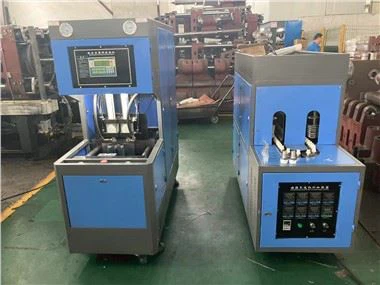 Semi Automatic Injection Blowing Blow Molding MachineA semi-automatic bottle blowing machine is a blow molding machine. A simple explanation is aAdd to Inquiry
 -
Cosmetic Bottle Blowing MachineCosmetic Bottle Blowing Machine is mainly used to blow plastic particles or finished preforms intoAdd to Inquiry


- Tel: +86-512-58451000
- Mob: +86-13601562785
- Email: cch@shenzhoumac.com
- Add: Fenghuang Town, Zhangjiagang City, Jiangsu Province, P.R.China
Injection Blowing Machine is a combination of injection molding machine and blow molding mechanism, including plasticizing mechanism, hydraulic system, control electrical appliances and other mechanical components. The common types are three station injection blow molding machine and four station injection blow molding machine. The three station machine has three stations: preform, blowing and demoulding, with each station separated by 120 °. The four station machine has one more pre forming station, with each station separated by 90 °. In addition, there is a double station injection blow molding machine with 180 ° separation between stations. The plastic container produced by injection blow molding machine has accurate size and does not need secondary processing, but the mold cost is high.
The first mock exam is multi cavity and high speed molding. No flash and waste, fully automatic integrated production. Precision threaded neck, excellent mechanical properties, tight fitting, close to the perfect qualified rate. It is the best partner of pharmaceutical packaging and food packaging containers. It can produce high-grade containers with high bottleneck precision, and is widely used in the manufacture of packaging bottles in medicine, food, cosmetics and chemical industries.
What is Injection Blowing Machine?
An injection blowing machine is a specialized piece of equipment used in the plastics manufacturing industry to produce hollow or bottle-shaped plastic products through a process known as injection blow molding (IBM). This process combines elements of other molding processes, including injection molding and blow molding, to create complex shapes with tight tolerance requirements.
High Productivity: IBMs can produce a large volume of bottles at high speeds, making them efficient for mass production.
Consistent Quality: The closed-loop system of IBMs allows for tight control over the process parameters, resulting in consistent bottle quality with minimal defects.
Material Efficiency: By controlling the amount of material injected and blown into the mold, IBMs help reduce material wastage compared to other processes.
Design Flexibility: IBMs can create complex shapes and incorporate multiple layers or additives into the bottle design, offering versatility in product development.
Energy Savings: The use of a cold-injection process reduces energy consumption compared to traditional hot-runner injection molding machines.
Less Scrap: The process minimizes the generation of waste material since the preform is fully utilized in the final blow molded product.
Tamper-evident And Specialty Features: IBMs allow the creation of bottles with built-in tamper-evident features and other special designs that enhance product safety and functionality.
Reduced Labor Costs: Automated operations reduce the need for manual labor, leading to lower labor costs and reduced risk of human error.
Integration Of Multiple Processes: Combining injection molding and blow molding processes in one machine simplifies the production line and streamlines the workflow.
Enhanced Aesthetics: IBMs enable the production of bottles with smooth surfaces and precise dimensions, enhancing the visual appeal of the final product.
Improved Shelf Life: Since the bottles can be designed to have uniform wall thickness, they can provide better barrier properties, thus extending the shelf life of the contents.
Regulatory Compliance: IBMs can be easily configured to meet stringent regulatory standards and guidelines, ensuring compliance with health and safety regulations.
Types of Injection Blowing Machine
Mono-layer IBMs: These machines produce bottles with a single layer of material. They are typically used for simpler bottle designs and are more cost-effective for lower volume production.
Multi-layer IBMs: These advanced machines are capable of creating bottles with multiple layers of different materials, allowing for the incorporation of additives like oxygen barriers or the adjustment of density for enhanced performance.
Continuous operation IBMs: As the name suggests, these machines operate continuously, moving seamlessly from injection to blow molding stages. They are designed for high-speed production and are ideal for large volume manufacturing.
Intermittent operation IBMs: Unlike continuous machines, these IBMs pause between cycles at the end of each injection and blow stage. They are generally used for smaller production volumes or when greater control over the molding process is required.
Vertical IBMs: These machines feature a vertical orientation, which can be advantageous for certain bottle shapes and sizes. They may be preferable in space-restricted environments or for specialized applications.
Horizontal IBMs: Horizontally oriented machines are the most common type and are designed for efficient production flow. They are typically used for standard bottle shapes and sizes.
Servo-driven IBMs: Incorporating servo motors, these machines offer enhanced precision and control over the injection and blow stages. They allow for more flexible production capabilities and can be programmed for a wide variety of bottle designs.
Application of Injection Blowing Machine


Plastic bottles: The injection blowing machine is commonly used in the production of plastic bottles, such as mineral water bottles, beverage bottles, and cosmetic bottles. It can produce bottles of various shapes and sizes.
Containers: It can be used to manufacture containers for various products, such as food containers, chemical containers, and medical containers. These containers need to have good sealing and barrier properties.
Pharmaceutical Packaging: The injection blowing machine is suitable for producing packaging for pharmaceuticals, such as vials, syringes, and ampoules. These packaging need to meet strict hygiene and safety standards.
Cosmetic Packaging: It is used in the production of cosmetic packaging, such as bottles, jars, and tubes. Cosmetic packaging often requires an attractive appearance and good protection of the contents.
Industrial Components: Some injection blowing machines can produce industrial components, such as caps, plugs, and connectors. These components need to have certain mechanical properties and sealing performance.
Automotive Parts: It can be applied to the manufacturing of automotive parts, such as fuel tank caps and fluid containers. These parts need to meet automotive industry standards.
Household Products: Injection blowing machines can produce household products, such as storage boxes, detergent bottles, and trash cans. These products need to have durability and ease of use.
Electrical Components: Some injection blowing machines are used in the production of electrical components, such as insulators and protective covers. These components need to have good electrical insulation properties.
Medical Devices: It is applicable to the manufacture of medical devices, such as syringe holders and sample collection tubes. Medical device packaging requires high cleanliness and sterilization.
Toy Packaging: The injection blowing machine can be used in the production of toy packaging, such as doll heads and toy vehicle bodies. Toy packaging needs to be safe and attractive.
Components of Injection Blowing Machine
An Injection Blowing Machine (IBM) consists of several key components that work together to produce seamless plastic bottles and containers. Here are the main components of an IBM
Injection Unit: This is where the plastic material, usually in the form of granules or pellets, is loaded. The injection unit heats the plastic until it becomes a molten liquid, which is then injected into the mold cavity. It typically includes an auger screw to feed the material, a heating system to melt the plastic, and a hydraulic or mechanical system to inject the molten plastic.
Blow Mold Station: After the injection of molten plastic, the hot gob (pellet of plastic) is transferred to the blow mold station. Here, the plastic is encased within a two-piece blow mold that shapes the plastic into the desired bottle form. Air is injected into the plastic to expand it against the mold walls, ensuring the correct shape and dimensions.
Clamping Mechanism: The clamping mechanism secures the mold halves together during the injection and blowing phases to contain the molten plastic and maintain the shape of the bottle as it cools and solidifies.
Transfer System: This component moves the molten plastic from the injection unit to the blow mold station and, later, the formed bottle out of the mold for cooling and further processing. The transfer system may use mechanical arms, conveyor belts, or robotic systems.
Cooling System: To solidify the injected plastic, a cooling system is employed. This can involve water-cooled channels in the mold or air-cooled systems that rapidly chill the plastic to room temperature.
Ejection Mechanism: Once the bottle has cooled and solidified, the ejection mechanism removes the finished bottle from the mold. This can be a simple mechanical push or a more sophisticated robotic system.
Control System: Modern IBMs are equipped with advanced control systems that regulate the temperature, pressure, timing, and movement of the various components to ensure consistent and precise production. These control systems may include Programmable Logic Controllers (PLCs), Human-Machine Interfaces (HMIs), and sensors for monitoring the injection and blowing processes.
Support Structures: The frame and support structures provide the rigid backbone of the machine, ensuring all components are properly aligned and stable during high-speed operations.
Material of Injection Blowing Machine
The materials used in the construction of Injection Blowing Machines (IBMs) are selected based on their mechanical properties, durability, resistance to high temperatures, and ease of machining. Common materials for the structural components of IBMs include
Steel: Structural steel is commonly used for the frame and support structures of IBMs due to its high strength and rigidity. It provides a stable platform for the precise movements required during the injection and blowing processes. Stainless steel may also be used in areas exposed to the environment or where cleanliness and corrosion resistance are important.
Aluminum: Aluminum is favored for components requiring light weight and good thermal conductivity, such as parts of the clamping mechanism or mold carriers. Its low weight allows for faster machine movements and reduced energy consumption.
Plastic: Certain machine components that do not require high strength, such as covers or guards, may be made from engineered plastics. These plastics offer benefits such as corrosion resistance, low weight, and ease of machining.
Composites: Carbon fiber reinforced plastics (CFRP) or glass-reinforced plastics (GRP) can be used in applications where high strength-to-weight ratios are necessary. These materials can be found in parts of the machine that benefit from reduced mass, such as moving frames or mold platens..
Hardox or Other Wear-resistant Steel: Components subject to wear, such as ejectors or parts of the transfer system, may be made from hardened steel grades designed to withstand abrasion and extend the service life of the machine.
Heat-resistant Alloys: For components exposed to high temperatures, such as those near the injection nozzle or in the cooling system, heat-resistant alloys like Hastelloy or Inconel may be utilized.
Rubber And Elastomers: Seals and gaskets are often made from rubber or elastomer compounds that can withstand the pressures and temperatures of the injection molding process while maintaining flexibility.
Process of Injection Blowing Machine
The process of an Injection Blowing Machine (IBM) involves several steps to create hollow plastic products such as bottles
Material Preparation: Plastic resins in the form of granules or pellets are loaded into the hopper of the injection unit. These raw materials need to be compatible with the injection and blowing process.
Injection: The plastic material is gravity fed from the hopper into the screw barrel of the injection unit. As the screw rotates, it melts the plastic through friction and heaters along the barrel. The melted plastic, now referred to as the "parison" or "gob," is injected into a preheated blow mold.
Clamping: Simultaneously with injection, the clamping mechanism secures the blow mold closed around the injected parison. This ensures that the plastic is contained within the mold and shaped correctly.
Blowing: Once the parison is in place, compressed air is injected into it, causing it to expand and conform to the interior shape of the blow mold. The pressure and duration of this step are critical to achieving the correct bottle size and wall thickness.
Cooling: After the parison has been expanded and shaped by the air pressure, it must be cooled to solidify. Cooling is typically achieved through water-cooled jackets around the mold or by circulating air at controlled temperatures.
Ejection And Transfer: Once the plastic has cooled sufficiently, the clamping mechanism opens, and the finished bottle is ejected from the blow mold. A transfer system then moves the bottle to the next stage, which could be labeling, packaging, or further processing.
Quality Control: Throughout the process, there are checks for consistency in bottle shape, size, and weight to ensure that the product meets quality standards.
How to Maintain Injection Blowing Machine
Regular Inspections: Conduct daily visual inspections of the machine for any signs of wear, damage, or unusual vibrations. Check for proper alignment of moving parts and ensure that all safety devices are operational.
Cleanliness: Keep the machine and surrounding area clean. Remove any fallen granules or debris that could interfere with machine operation or cause contamination. Pay special attention to the cooling system and heating elements to prevent clogging or overheating.
Lubrication: Lubricate all moving parts according to the manufacturer's recommendations. This reduces friction and wear, extends the life of the machine, and prevents unnecessary downtime. Use high-quality lubricants suitable for the operating conditions.
Mold Maintenance: The blow mold is a critical component and should be kept clean and free from defects. Regularly check for signs of wear, such as scratches or deformation, and replace molds when necessary to maintain part quality.
Calibration: Periodically calibrate the machine's sensors, controls, and measurement devices to ensure accuracy and repeatability of the production process.
Software Updates: Keep the control software up to date with the latest firmware and updates provided by the manufacturer to improve functionality and security.
Preventive Maintenance Plans: Develop and follow a preventive maintenance schedule that includes routine checks, adjustments, and replacements. This schedule should be customized based on the machine's usage and operating conditions.
Training Operators: Ensure that operators are trained on proper machine operation and maintenance procedures. Their familiarity with the equipment can help identify issues early and prevent accidents.
Record Keeping: Maintain detailed records of maintenance activities, repairs, and any incidents. This information is valuable for tracking trends, scheduling maintenance, and justifying capital expenditures.
Qualified Service Personnel: Use qualified technicians for servicing and repairing the machine. They have the expertise to perform complex tasks and diagnose problems accurately.
How to Choose Injection Blowing Machine
Choosing the right Injection Blowing Machine (IBM) requires careful consideration of various factors to ensure that it meets the specific needs of your manufacturing process. Here are key aspects to consider when selecting an IBM
Size and capacity: Determine the desired bottle size and volume. Choose a machine capable of producing the required quantity efficiently.
Material compatibility: Select a machine that can handle the type of plastic resin you intend to use, ensuring compatibility with the injection and blowing processes.
Clamping force: The machine should have sufficient clamping force to securely hold the mold during the injection and blowing phases.
Injection unit: The injection unit should provide the necessary shot volume and pressure to inject the correct amount of molten plastic into the mold cavity.
Blowing system: Evaluate the blowing system for its ability to produce the desired bottle shape and size with consistent results.
Cycle time: Shorter cycle times increase productivity. Consider the machine’s cycle time relative to your production requirements.
Energy efficiency: Opt for machines with advanced energy-saving features, which can lead to cost savings over time.
Automation level: Higher levels of automation can improve consistency, reduce labor costs, and increase throughput.
Accuracy of measurements: Ensure that the machine can maintain tight tolerances for consistent bottle dimensions and quality.
Control systems: Invest in machines with sophisticated control systems that allow for precise process adjustments and monitoring.
Availability of spare parts: Choose a machine from a manufacturer with a reliable supply chain for easy access to spare parts.
Service and technical support: Opt for a supplier that offers comprehensive after-sales support, including maintenance contracts, training, and technical assistance.
Initial investment: Compare the purchase price of different machines, considering the features and capabilities they offer.
Operating costs: Factor in running costs such as energy consumption, maintenance, and potential downtime.
Return on investment (ROI): Evaluate the projected output against the investment to determine how long it will take to see a return on the machine purchase.
Flexibility: Consider a machine that can accommodate future changes in bottle design or material types without significant modifications.
Expandability: If there's potential for increased production volumes, look for machines that can be easily scaled up.
Manufacturer reputation: Choose a reputable manufacturer with a history of producing reliable and efficient machines.
Customer references: Look for case studies or testimonials from existing customers to understand the performance and reliability of the machine in real-world scenarios.
Influence Factors of Injection Blowing Machine Design
The design of an Injection Blowing Machine (IBM) is influenced by several key factors that must be carefully considered to ensure the machine's effectiveness, efficiency, and reliability in the production of plastic bottles and containers. These factors include:
Material Properties: The type of polymer to be processed dictates the design parameters. Different plastics have varying melt temperatures, viscosities, and shrinkage rates, affecting the injection unit's design, clamping forces, and cooling systems.
Production Volume: The expected throughput influences the scale of the machine. High-volume production requires larger, more robust machines capable of maintaining continuous operation with minimal downtime.
Product Specifications: The size, shape, and complexity of the bottles to be produced directly impact the design of the blow mold, injection unit, and parison control mechanisms.
Machine Dynamics: The mechanical design of the machine must handle the dynamic forces involved in injection, clamping, and blowing cycles. This includes considerations for rapid and precise movements, vibration dampening, and structural integrity.
Energy Efficiency: Designers aim to minimize energy consumption through optimized heating, cooling, and drive systems. Energy efficiency not only reduces operational costs but also contributes to environmental sustainability.
Maintenance and Accessibility: The accessibility of machine components for cleaning and maintenance is crucial for reducing downtime and extending the machine’s lifespan. The design should facilitate easy disassembly and reassembly.
Safety Standards: Compliance with industry safety standards is paramount. The design must incorporate safety features such as emergency stops, interlocks, and safeguards to protect operators and the machine itself.
Automation Level: The degree of automation affects the complexity of the control systems and the level of integration between machine components. Advanced automation can improve precision, consistency, and operator convenience.
Technological Advancements: Integration of the latest technologies, such as servo motors for precise motion control, advanced sensors for monitoring machine health, and digital interfaces for remote monitoring and control, influence the design.
Regulatory Compliance: Designs must adhere to local and international regulations regarding emissions, noise levels, and waste disposal.
Cost Constraints: Balancing the desired features with economic viability is essential. Cost-effective solutions may involve the use of standard components where possible and the optimization of material usage.
User Interface: The design of the machine's control panel and user interface impacts the ease of operation and setup. Intuitive designs can significantly enhance operator efficiency and reduce errors.
What Is the Difference Between Extrusion and Injection Molding?
Extrusion and injection molding are two fundamental processes used in the manufacturing of plastic parts, each with distinct characteristics and applications
Extrusion molding
- Extrusion is a continuous process where plastic material, often in the form of pellets, is melted and pushed through a die to create a product of a specific cross-section.
- The extruded material cools and solidifies as it exits the die, forming a long profile or tube that can be cut into desired lengths.
- Common products made by extrusion include pipes, tubes, window frames, and wire coatings.
- Extrusion is well-suited for producing long, consistent parts with simple to moderate geometric complexity.
- It's an economical choice for high-volume production due to its continuous operation and ability to produce without the need for a custom mold for every part.
Injection molding
- Injection molding is a batch process where plastic is melted and injected into a custom-designed mold under high pressure.
- The molten plastic fills the mold cavity and takes the shape of the part.
- Once the plastic cools and solidifies, the mold is opened, and the part is ejected.
- Injection molding is ideal for creating complex shapes with high precision and fine detail, such as toys, electronic housings, and automotive components.
- It requires the creation of a detailed steel or aluminum mold for each part design, which can be costly but yields high-quality and consistent results.
- This process is typically used for medium to high-volume production runs, where the cost of the mold is offset by the efficiency of the molding process.
How Does an IBM Differ from Other Molding Technologies like Injection Stretch Blow Molding (ISBM)?
An IBM (Injection Blow Molding) and Injection Stretch Blow Molding (ISBM) are both molding technologies, but they have some differences. Here are some of the key distinctions
Process: In IBM, the parison (a tube of molten plastic) is injection molded and then blow molded. In ISBM, the parison is stretched and blow molded in one step.
Stretching: IBM typically does not involve the stretching of the parison, while ISBM involves stretching the parison to increase the strength and stiffness of the final product.
Complex Shapes: IBM is better suited for producing simple shapes, while ISBM can handle more complex shapes and designs.
Thickness Control: ISBM allows for better control of the wall thickness of the molded part, resulting in more uniform and controlled products.
Cost: The equipment and process of ISBM are generally more expensive than IBM.
Application: IBM is commonly used for smaller and simpler products, while ISBM is often used for larger and more complex containers, such as bottles for beverages.
Performance: Products molded using ISBM often have better mechanical properties, such as impact resistance and tensile strength.
It's important to note that the choice between IBM and other molding technologies like ISBM depends on specific product requirements, production volumes, and cost considerations. Each technology has its advantages and limitations, and the best option depends on the specific application and desired characteristics of the molded part.
What Are the Factors That Affect the Cooling Time in an IBM?
The cooling time in an Injection Blowing Machine (IBM) is influenced by several factors that determine the rate at which the injected polymer solidifies. Here are some key factors:
Material Properties: Different plastics have varying rates of crystallization and thermal conductivity, which directly impact cooling time. Materials with higher melt temperatures and lower densities tend to require longer cooling times.
Mold Design: The complexity of the mold design affects cooling time. More intricate shapes or thicker sections within the mold may take longer to cool completely.
Coolant Temperature and Flow Rate: The temperature and flow rate of the cooling fluid (usually water) influence the cooling rate. Coolant at lower temperatures or with a higher flow rate can reduce cooling time.
Coolant Channels: The layout and size of the cooling channels within the mold affect heat transfer efficiency. Well-designed channels that allow for even heat distribution can shorten cooling times.
Injected Material Thickness: The thickness of the injected material affects the cooling time; thicker walls require more time to solidify than thinner walls.
Machine Parameters: The injection pressure and speed can affect cooling time. Higher injection speeds may lead to faster cooling due to better packing and reduced voids within the material.
Environmental Conditions: Ambient temperature and humidity can indirectly affect cooling time by influencing the temperature of the incoming coolant and the heat dissipation from the mold.
Cycle Time: The target cycle time for the entire injection blowing process dictates how much time is available for cooling, which can influence the cooling time set for the machine.
Machine Age and Maintenance: Older machines or those not properly maintained may have inefficient cooling systems, leading to longer cooling times.
Control Systems: Advanced control systems can optimize cooling times by adjusting parameters in real-time based on feedback from sensors monitoring the cooling process.
Our Factory
Located in Zhangjiagang City-new port City of china, our company is close to S38/S19 Express Way and G204 National Road, near many big cities of Shanghai, Nanjing, Suzhou, Wuxi, Nantong, with convenient traffic.


FAQ
Q: What is an Injection Blowing Machine (IBM)?
Q: How does an IBM work?
Q: What are the primary advantages of using an IBM?
Q: What materials can be processed in an IBM?
Q: How is the cooling system designed in an IBM?
Q: What are the considerations for mold design in an IBM?
Q: How is parison control managed in an IBM?
Q: What are the typical maintenance tasks for an IBM?
Q: How can I optimize the efficiency of my IBM?
Q: What are the safety precautions when operating an IBM?
Q: How do I troubleshoot common problems with my injection blowing machine?
Q: What safety precautions should I follow when using an injection blowing machine?
Q: How do I set up an injection blowing machine for production?
Q: How do I adjust the settings on my injection blowing machine to achieve the best results?
Q: What is the maximum production capacity of an injection blowing machine?
Q: Can I use an injection blowing machine to produce products with different shapes and sizes?
Q: What are the most common mistakes made when operating an injection blowing machine?
Q: How can I avoid common mistakes when operating an injection blowing machine?
Q: How do I clean my injection blowing machine after production?
Q: Can I use an injection blowing machine to produce products with special properties, such as UV resistance or barrier properties?
We're well-known as one of the leading injection blowing machine manufacturers and suppliers in China. We warmly welcome you to or wholesale customized injection blowing machine for sale here from our factory. All products made in China are with high quality and competitive price.
semi auto pet blow moulding machine, bottle blow molding machine, machine blow