

Auxiliary Machinery
Your Professional Auxiliary Machinery Supplier
We specialize in manufacturing and exporting injection molding machines that have a shot weight of 60-10000 grams and a clamping force of 60- 1600 tons.
Why Choose Us
Quality Guaranteed
The most notable is the ISO9001 Quality Certificate (Registered by Germany TUV Management Service). Our company is accredited for meeting international standards in management responsibility, quality control, design control, process control, customer service, and other key criteria.
Global Sales Network
Our machines are sold to more than 20 provinces in China and exported to the Middle East, Southeast Asia, Russia, Middle Asia, and Africa.
Rich Experience
We have decades of knowledge and experience to execute precise manufacturing, our high-quality SZ series automatic computerized injection molding machines and their downstream equipment using imported hydraulic and electrical seals.
Wide Product Range
Our products include general injection molding machines, servo injection molding machines, bottle cap injection molding machines, bucket/crate injection molding machines, blow molding machines, plastic mould, etc.
-
 Plastic Products CrusherAdvantages of the machine: This machine is suitable for all kinds of soft and hard plastics,Add to Inquiry
 -
 Raw Material Hopper DryerThis machine is widely used for drying and dehumidifying any plastic raw materials, and it can dryAdd to Inquiry
 -
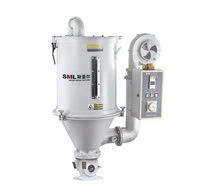 Hopper DryerHopper DryerIn order to better assist the work of the injection molding machine, it is also veryAdd to Inquiry
 -
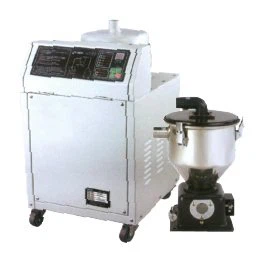 Air ChillerThe cooling temperature of this series of chillers is 7-35℃, and a lower temperature can be setAdd to Inquiry
 -
 Raw Materail Auto LoaderAdvantages of this machine: The main engine and the hopper are designed separately, which isAdd to Inquiry
 -
 Raw Material and Color Master Batch MixerRaw Material and Color Master Batch Mixer is a device mainly used for automatic proportioning andAdd to Inquiry
 -
 Mold Temperature Controller●Using microcomputer control, high accuracy;. ●Water (oil) pump overload protection, safe andAdd to Inquiry


- Tel: +86-512-58451000
- Mob: +86-13601562785
- Email: cch@shenzhoumac.com
- Add: Fenghuang Town, Zhangjiagang City, Jiangsu Province, P.R.China
Auxiliary Machinery is some equipment commonly used in the plastic products industry, usually including plastic products crusher, Raw Material Hopper Dryer, Air Chiller, etc. We have various types of products to meet your different production needs. Our equipment makes the plastic products produced more environmentally friendly and biodegradable.
Our Auxiliary Machinery is a production aid for injection molding machines and is very cost effective for drying plastic materials. They can simply dry plastic materials that have become wet during packaging, shipping and recycling. They can also be used as a direct replacement for ordinary hoppers, which offer energy savings of over 40% compared to ordinary hoppers. They also have a beautiful appearance, low surface temperature, durability and higher drying efficiency.

Definition of Auxiliary Machinery
Our auxiliary machinery is a production aid for injection molding machines and is cost-effective for drying plastic materials. They can simply dry plastic materials that have become wet during packaging, shipping, and recycling. They can also be used as a direct replacement for ordinary hoppers, which offer energy savings of over 40% compared to ordinary hoppers. Auxiliary machinery is commonly used in the plastic products industry, usually including plastic products crusher, raw material hopper dryer, raw material auto loader, raw material and color master batch mixer, air chiller, mold temperature controller, etc.
Benefits of Auxiliary Machinery
Improved Production Efficiency
Auxiliary machinery, such as the raw material auto loader, can streamline the injection molding process. They enable faster and more precise handling of raw material, reliably delivering materials to injection molding machines, without contamination or moisture regain.
Material Handling and Mixing
They can properly prepare and dry valuable raw materials, with minimal waste. Also, auxiliary machinery aids in the proper mixing of materials, ensuring a uniform composition for injection molding. This results in improved product quality and reduces the likelihood of defects.
Reliable Temperature Control
Auxiliary machinery, such as air chiller and mold temperature controller, can ensure accurate and reliable temperature control for product quality and energy efficiency. The energy-efficient cooling systems can optimize temperature control, leading to reduced energy consumption during the molding process.
Enhanced Precision and Quality
Precision is critical in injection molding, and auxiliary machinery can contribute to achieving tight tolerances and consistent product quality. Automated systems can handle intricate tasks with a level of accuracy and maintain process consistency over long production periods.
Types of Auxiliary Machinery

A plastic crusher, also known as a plastic crusher, is mainly used to crush various plastic plastics and rubber such as plastic profiles, tubes, rods, wires, films, and waste rubber products. The pellets can be used directly for extruder or injection molding or can be recycled by base granulation. Plastic crushers are an essential machine in the plastic recycling process, responsible for reducing plastic waste and pollution. The crushing efficiency and power of a plastic crusher determine how much material it can crush at once. A higher crushing efficiency and power can help you save time and increase productivity.
Working Principle
The plastic crusher drives the movable cutter disc to rotate at a high speed by the motor, and the relative movement with the fixed knife during the high-speed rotation of the movable knife uses the gap formed between the movable knife and the fixed knife to cause the plastic crushing and shearing slit to be large. The block plastic is crushed, and the crushed plastic is filtered through the screen to filter the plastic particle size.
Advantages
- Crushing Sizes: Different types of plastic require various sizes of crushing blades to produce the perfect crushing particles. Depending on the need, a micro crusher may be necessary and can help save more plastic.
- Safety Features: Safety features such as an automatic shut-off can prevent accidents and protect the crusher from damage. Additionally, safety guards and emergency stop functions are crucial features that can prevent injury to operators.
- Noise Reduction Capability: Plastic crushers can produce a lot of noise, which can be disruptive. The ability to reduce noise levels can minimize these disruptions and ensure efficient operation. Noise levels can be reduced through sound insulation and vibration damping features included in the design.
- Automation Features: Plastic crushers come with automated features such as self-cleaning, oiling system or even AC system to keep the machine cool during a long period of working. These features make the machine easier to operate and maintain and improve overall performance.
Application
- Plastic Recycling Plants: The plastic crusher can be used for the re-grinding and recycling of all waste plastics such as boxes, thin pipe fittings, blow-molded parts, bottles, shells, household plastic products, etc.
- Injection Molding Auxiliary Machine: The plastic crusher can be used as an auxiliary machine for the injection molding machine to re-grind the nozzle materials or defective parts of the injection molding machine use.
Raw Material Hopper Dryer
The hopper dryer is a replacement product for the standard hot-air dryer. Based on the original function, it takes full consideration of environmental protection factors and improves it. It dries raw materials that are moist due to packaging, shipping, or recycling. The straight-knot design is particularly suitable for direct installation on plastic molding machines for drying, which is fast and saves space.

Working Principle
In raw material processing, the hopper dryer blows constant high-temperature air into the drying barrel through a drying fan. After baking the raw material, the original moisture in the barrel is taken away to achieve the purpose of removing the moisture contained in the raw material. The wind-blown by the fan is heated to high-temperature dry hot air by electric heating. Through the screen protector and the hole screen device, the hot air can be evenly dispersed in the raw materials in the drying barrel. Optional hot air recovery device. The blown-out air is filtered by the return air and enters the drying fan to form a closed circulation loop, saving electricity.
Advantages
- Improved Moldability: Dry plastic material enhances moldability during the injection molding process, leading to better-quality finished products.
- Prevention of Defects: Removing moisture from raw materials helps prevent defects such as bubbles or surface imperfections in the final plastic products.
- Energy Efficiency: They incorporate energy-efficient features to optimize the drying process, contributing to overall energy savings.
Applications
- Injection Molding: Ensures that plastic resin used in injection molding processes is free from moisture, improving product quality.
- Extrusion Processes: Commonly used in the production of plastic films, pipes, and other extruded products.
- Blow Molding: Ensures proper drying of raw materials for blow molding applications.
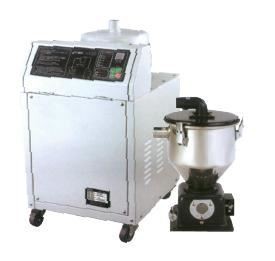
Raw material auto loader is a kind of machine to feed plastic raw material into hopper receivers through vacuum conveying. In short, it is a device for loading plastic materials by vacuum. It is also named auto Loader, plastic hopper loader, vacuum hopper loader, etc. It uses the principle of ventilation to deliver plastic raw materials to the barrel of the injection molding machine. When the material reaches a certain level, the suction opportunity stops, and when the material is not enough, it can be conveyed again.
Working Principle
A raw material auto loader is designed to automatically load plastic resin or granules into processing machines. The loader typically uses a vacuum or suction mechanism to convey the raw material from a storage container or silo to the processing machine's hopper.
Advantages
- Labor Savings: Automation of material loading reduces the need for manual handling, saving labor costs and improving overall efficiency.
- Reduced Contamination Risk: By minimizing manual intervention, auto loaders help prevent contamination of raw materials, ensuring product quality.
- Increased Productivity: Faster and more precise material loading contributes to increased production rates.
Applications
- Injection Molding: It facilitates the continuous supply of raw materials to injection molding machines.
- Extrusion Processes: Raw material auto loadercan be used in the production of plastic films, sheets, and profiles.
- Blow Molding: It ensures a consistent supply of plastic resin for blow molding applications.
Raw Material and Color Master Batch Mixer
A raw material and color master batch mixer is a type of industrial mixer that is used to mix various types of materials. The mixer consists of a cylindrical container that is rotated on its axis. The materials are added to the container and then mixed together by rotation. The mixing action can be either continuous or batch. The plastic vertical mixer can be used in a variety of industries, such as food and feed, pharmaceutical, chemical, and plastic granule or powder. It is often used to mix powders, granules, and other materials together.
Working Principle
The working principle of the plastic vertical mixer is simple. The materials are added to the cylindrical container and then mixed together by rotation. The mixing action can be either continuous or batch. Continuous mixing means that the materials are constantly being mixed together as they pass through the mixer. This type of mixer is often used for products that require a high degree of uniformity. Batch mixing means that the materials are only mixed together for a specific amount of time before being discharged from the mixer. The choice of continuous or batch mixing depends on the type of material you are mixing and the desired mixing effect.

Advantages
- Consistent Coloration: This mixer can ensure uniform distribution of color masterbatches, resulting in consistent coloration of the final plastic products.
- Accurate Material Proportioning: The raw material and color master batch mixer allows for precise control over the proportions of different raw materials, ensuring product consistency.
- Time and Labor Efficiency: It adopts automated mixing, this mixing process saves time and labor compared to manual mixing methods.
Applications
- Mixing Calcium Carbonate(CaCo3) with PP Raw Material: A vertical mixer can mix CaCo3 and PP materials easily because it has a strong mixing ability. The CaCO3 powder will be evenly mixed with the PP raw material in a short time by the action of the mixer. Because pp raw material containing calcium carbonate will have better ductility in the later extrusion drawing process.
- Mixing Ultraviolet Antioxidant (Anti-UV agent) with PP Raw Material: The vertical mixer can also mix ultraviolet antioxidants with PP raw material. The mixing of these two materials is very important because they can protect plastic products from ultraviolet rays. If the Anti-UV agent is not mixed evenly with the PP raw material, it will cause the plastic products to become yellow and brittle over time. But if they are mixed evenly, the plastic products will be more durable and have a longer lifespan.
- Mixing Recycled PP Material Pellets with PP Raw Material: Mixing recycled PP material pellets and plastic raw materials together in a vertical mixer for production cost reasons. The common plastic products in life are not made of completely pure PP raw materials. They all contain a small amount of recycled PP material particles. The addition of a reasonable percentage of recycled PP plastics to raw PP materials not only does not have any negative impact on the production of new plastic products, but also reduces production costs and, as a side effect, promotes the global recycling of plastic waste.
- Mixing Color Masterbatch with PP Raw Material: Color masterbatch is a concentrated mixture of pigments and additives that are dissolved in a carrier resin. It is used to color plastic products. The mixing of color masterbatch and PP raw material is very important because it can give the plastic products the desired color. If the color masterbatch is not mixed evenly with the PP raw material, the plastic products will have streaks and spots.

Air Chiller
Air cooled chillers are refrigeration systems that cool fluids and work in tandem with the air handler system of a facility. Air cooled chillers are types of chillers that rely on the use of fans to reject heat outside the building rather than relying on cooling towers. Air cooled chillers consist of four major parts: a compressor, an evaporator, a condenser, and an expansion valve. These chillers are utilized in large buildings like indoor malls, industrial buildings, hotels, and hospitals. They are also used in locations that may consist of many buildings requiring cooling, like theme parks and outdoor malls. They are versatile workhorses capable of providing cooling power to large and small operations.
Working Principle
The working principle of air cooled chillers is based on the absorption of heat from processed water. Once the air handler system uses up the water, it becomes warm and is returned to the chiller. The chiller’s evaporator is utilized to transfer heat away from the water. A low-pressure gas is created by the evaporation of liquid refrigerant over the evaporator tube. Next, the refrigerant that has been evaporated travels to the compressor. At the compressor, low-pressure gas is compressed into high-pressure gas. The gas will then leave and travel to the air cooled condensers. While inside the condenser, heat is removed from the chiller by blowing out the heat to the outside through the fans located on the side of the condenser. It is ideal if the chiller is placed outdoors or in a large indoor location. This is so because the heat is blown outside the chiller, and the excess heat effect is reduced. The refrigerant turns into a high-pressure liquid soon after the gas leaves the condenser. The high-pressure liquid then flows to the evaporator via the expansion valve. As this process takes place, the refrigerant changes from a high-pressure liquid to a low-pressure liquid. Since an industrial air cooled chiller’s working principle is also based on a continuous cycle, this low-pressure liquid will then be transferred back to the evaporator. At the evaporator, the whole cycle repeats itself.
Advantages
- Temperature Control: The air chiller ensures that processing equipment operates within the recommended temperature range, optimizing the quality of the molded products.
- Prevention of Overheating: This air chiller helps prevent overheating of machinery, which can lead to defects in the plastic products and damage to equipment.
- Increased Productivity: It can ensure stable operating temperatures which contribute to consistent production rates and product quality.
Applications
- Injection Molding: It can maintain proper temperatures during the molding process for enhanced product quality.
- Extrusion Processes: The air chiller can be used in the production of plastic films, sheets, and profiles.
- Blow Molding: It ensures optimal cooling during the production of hollow plastic products.
Mold Temperature Controller
Mold temperature controllers are used to pre-heat and maintain molding tools' temperatures and can be used for various production purposes and scenarios, such as injection molding, extrusion, blow molding, forging, and the shoe industry. Water and oil temperature controllers have individually suited features, making them more suitable for some applications than others.
Working Principle
In injection molding, we usually control the mold at a fixed temperature by making coolant continuously flow through the mold. If the coolant flow is not enough, or the coolant temperature is not as expected, the mold temperature won’t be able to keep at the designated temperature. The mold temperature controller circulates cooling fluid through the mold's cooling circuits to provide equilibrium to the heat flux experienced by the mold for every cycle. It is common to run separate mold temperature controllers for each mold half. This set-up allows for greater process control and processability.

Advantages
- Improved Molding Precision: The mold temperature controller can maintain consistent mold temperatures, contributing to better precision and quality of the final plastic products.
- Reduced Cycle Times: Proper temperature control allows for faster cooling of molded products, reducing overall cycle times.
- Minimized Warpage and Defects: Stable mold temperatures help prevent issues like warpage and defects in the molded products.
Applications
- Injection Molding: Ensures precise temperature control for molds, improving the quality of molded products.
- Die Casting: Used in the production of plastic components through the die-casting process.
- Extrusion Processes: Contributes to the production of high-quality plastic extrusions.
Auxiliary Equipment Process Tips For Injection Molding


- Always keep your hopper cover in place. One major source of material contamination is ceiling debris such as dust, water condensation on overhead pipes, and other air-borne trash.
- Before filling an empty hopper, make sure your hopper is clean. Blow it out with air to remove any dust that may be present. Then use a clean shop rag sprayed lightly with vegetable oil (such as PAM) and wipe down the walls inside the hopper to catch any fines that might be left from the last run. Do not use paper towel as this will leave paper dust which will cause defective parts.
- Make sure the screen in your granulator (grinder) has the proper hole and space settings for making regrind from the material you are grinding. If the holes are too large the regrind material will take much longer to melt than the virgin it is mixed with. That can result in an improperly structured “melt” and will cause defective molded products.
- Mold temperature controllers are designed to “maintain” a predetermined temperature of the injection mold by circulating water (or in some cases, oil for mold temperatures above 200 degrees F) through the mold using hoses connected to metal fittings or pipes on the mold. The controller compares the average temperature of the circulated water to the preset desired temperature and either adds cold water or adds more heat (using electric heater coils) to make sure the mold keeps a stable temperature for molding. Understanding this process is necessary for knowing how to control it.
- There is an indicator on the unit that displays the temperature setting you have set for the mold you are running. BUT, that is NOT actually the temperature of the mold. So if someone were to ask you at what temperature are you running your mold you should NOT tell them the seting on the water control unit. You should actually take a pyrometer and check a few points on the molding surfaces of the mold in an open position. You will find there may be a big difference between those two values.
- Vacuum loaders are commonly used for transporting material from a container to a hopper on the molding machine. Due to friction a buildup of dust will accumulate inside the clear plastic hose used for that transporting. When changing material types or colors it is critical to remove that fine dust caused by the previous material. You can use a clean shop rag to clean the dust away by simply placing it in the hose and vacuuming it through to the hopper. Repeat as necessary, and on the final trip lightly spray the rag with PAM (or you can use a very light coat of mold release spray). This will aid in getting the last few particles of dust and will also help keep dust from forming during the next molding run.
- A machine’s hopper is designed as a basic unit that holds approximately 2 hours worth of generic polystyrene. The bigger the machine, the larger the hopper but it is still designed for 2 hours’ worth of plastic. The reason is that the machine manufacturers know that plastic material must be dried prior to molding but that it only stays dry from 2 to 4 hours after the initial drying activity. Hopper extensions are available but should only be used if hopper dryer units are also installed to keep the plastic dry while it resides in the hopper.
Maintenance Tips for Auxiliary Machinery
Before And After’ Auxiliary Machinery Checklist
As with all pieces of equipment or machinery, prevention is very much better than cure. Drawing up a basic list of maintenance checks to be carried out before and after each use will help operators spot problems early. Issues can then be addressed and repairs carried out before things get too serious and the machine needs more significant attention. Make sure the shot counter is working correctly, as this will tell you when a more thorough service and maintenance is required. Creating checklists like this is also an essential part of keeping the operators safe and free from the risk of injury.
Surface Examination
Always check the surfaces on the auxiliary machinery before and after use. Look for foreign objects and contaminants, such as dust, debris or bits of plastic materials that have not been cleaned out correctly. Dust and debris can interfere with the mechanisms of the injection moulding machine. Foreign objects can also mix in with the new plastic being added to the machine, compromising final quality. Leaving unwanted items on surfaces can also cause the new plastic to seep into the parting area during the mould injection part of the process.
Deep Cleaning
As above, finding dust or debris on the surface of a finished injection moulded part can render that part unusable, thus wasting precious time, money and resources. Cleaning the auxiliary machinery after every use prevents the build-up of contaminants like this. As a minimum, wipe the auxiliary machinery down with a standard degreasing agent or mild solvent. Use a cotton or other lint-free cloth to avoid leaving lint on the surface of the auxiliary machinery.
Post-Maintenance Jobs
If the auxiliary machinery is being placed in storage for a while, making sure that it is totally dry is even more important. Moisture and residual water can cause rust and scale stains, as well as corrosion if the mould is sealed. Even if you are simply setting the machine up for the next job, take time to log the maintenance and cleaning that you have done, along with the date and time. This will help you and others understand the service history of a machine and pinpoint when any faults are discovered and fixed.
Certification
Our company is accredited for meeting international standards in management responsibility, quality control, design control, process control, customer service, and other key criteria.

Our Factory
Located in Zhangjiagang City of China, our company is near many big cities of Shanghai, Nanjing, Suzhou, Wuxi, and Nantong, with convenient traffic.


Ultimate FAQ Guide to Auxiliary Machinery
Q: What are the primary benefits of using auxiliary machinery in injection molding?
Q: How does auxiliary machinery contribute to energy savings in injection molding?
Q: What are the key applications of auxiliary machinery in the injection molding industry?
Q: How does the integration of auxiliary machinery impact the overall efficiency of injection molding operations?
Q: Can auxiliary machinery adapt to different specifications or requirements in injection molding?
Q: How does auxiliary machinery impact the quality of final plastic products in injection molding?
Q: What is the difference between plastic shredder and plastic crusher?
Q: What is the advantage of crusher machine?
Q: What is the difference between hopper dryer and dehumidifier?
Q: Is hopper dryer auxiliary equipment?
Q: How does a raw material auto loader contribute to quality control in plastic processing?
Q: Can a raw material auto loader adapt to different types of plastic resins?
Q: What features should be considered when selecting a raw material auto loader?
Capacity: Ensure the loader can handle the required volume of materials.
Automation Level: Check the degree of automation for compatibility with production needs.
Compatibility: Verify that the loader is suitable for the types of plastic resins used.
Q: Can a raw material auto loader be integrated with existing processing equipment?
Q: Can a raw material and color master batch mixer handle different types of colorants and additives?
Q: What is chiller in injection molding?
Q: How do you size a chiller for injection molding?
ΔT°F = Incoming Water Temperature (°F) - Required Chilled Water Temperature. Example: ΔT°F = 70°F - 58°F = 12°F
2. Calculate Btu/Hr.
BTU/hr. = Gallons per hr x 8.33 x ΔT°F
Example: 40 gpm x 60 x 8.33 x 12°F = 239,904 BTU/hr.
3. Calculate Tons of Cooling Capacity
Tons = BTU/hr. ÷ 12,000
Example: Ton capacity = 239,904 BTU/hr. ÷ 12,000 = 19.992 tons
4. Oversize the Chiller by 20%
Ideal Size in Tons = Tons x 1.2
Example: 19.992 x 1.2 = 23.9904
5. You Have the Ideal Size for Your Needs
Example: a 23.9904 (or 25-Ton) chiller is required
Q: What is the recommended mold temperature?
Q: What is oil mold temperature controller unit?
Q: What to know before selecting a mold temperature controller?
1. Heat Conducting Medium: Water or Oil?
Heat-conducting mediums can be either water or oil; as discussed above, both systems have unique benefits. For example, water heat conducting mediums allow precise control over the exact temperature, but the temperature can only reach up to 180℃. Whereas, if you use a system with oil as the heat conducting medium, you can reach much higher temperatures, up to 350℃, which is more suitable for product manufacturing that uses compounds with higher melting points.
2. Cooling Mode
Internal and external cooling systems can be used in temperature control units. It will depend on the cooling capacity you need for production, if you need extra cooling capacity Flying Tiger can add an external cooling system. Our standard products feature internal temperature controls, which is a fast, and efficient cooling method. This keeps the temperature consistent throughout the process and limits temperature variations.
3. Control System
The control system can be either analog or digital. With digital controllers, you can use an intuitive digital screen to set your temperature and turn the controller on or off; this is the most straightforward method. Both systems are precise. And yet if a customer chooses a PLC system, it is easier to connect and communicate with other machines and add additional sensors for data collection.
4. Production Environment
Production environments can impact the functionality of temperature control units. For example, analog control systems are suitable for harsh production environments as they can withstand significant electronic noise without disrupting the process. This is due to the analog controls that do not rely on an electronic screen. On the other hand, whether production is conducted in a clean room or not also matters. Because oil temperature controllers operate on an oil vapor. If there is oil leakage, it can be challenging to clean the environment. Therefore, an oil temperature controller model is generally not recommended for a cleanroom environment.
We're well-known as one of the leading auxiliary machinery manufacturers and suppliers in China. We warmly welcome you to or wholesale customized auxiliary machinery for sale here from our factory. All products made in China are with high quality and competitive price.
mould temperature controller, Raw Material and Color Master Batch Mixer, auxiliary machinery for bending