

Injection Molding Machine
We specialize in manufacturing and exporting injection molding machines that have a shot weight of 60-10000 grams and a clamping force of 60- 1600 tons.
Why Choose Us
Quality Guaranteed
The most notable is the ISO9001 Quality Certificate (Registered by Germany TUV Management Service). Our company is accredited for meeting international standards in management responsibility, quality control, design control, process control, customer service, and other key criteria.
Global Sales Network
Our machines are sold to more than 20 provinces in China and exported to the Middle East, Southeast Asia, Russia, Middle Asia, and Africa.
Rich Experience
We have decades of knowledge and experience to execute precise manufacturing, our high-quality SZ series automatic computerized injection molding machines and their downstream equipment using imported hydraulic and electrical seals.
Wide Product Range
Our products include general injection molding machines, servo injection molding machines, bottle cap injection molding machines, bucket/crate injection molding machines, blow molding machines, plastic mould, etc.
-
 Servo System Injection Molding MachineThe Servo System Injection Molding Machine is a different type of injection molding machine fromAdd to Inquiry
 -
 Hydraulic Injection Molding MachineHydraulic Injection Molding Machine is the main molding equipment that uses molds to make variousAdd to Inquiry
 -
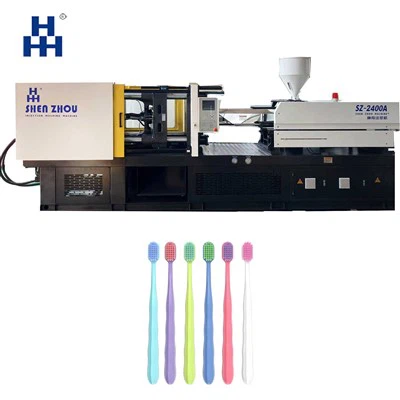 Plastic Adult Toothbrush Injection Making Molding MachineInjection molding machine is a commonly used plastic processing equipment, used to inject meltedAdd to Inquiry
 -
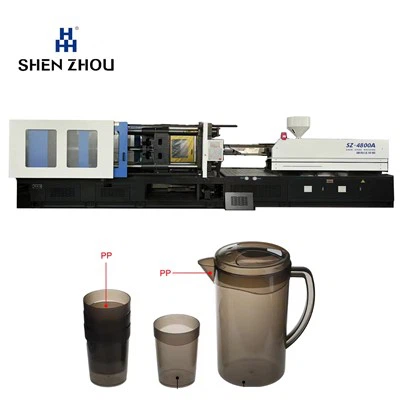 Plastic Kettle Set Juice Teapot With Lid Injection Making...A plastic kettle is a container used to hold water or other beverages, usually made of plasticAdd to Inquiry
 -
 Plastic Square Restaurant Plates Flat Plate Dinner Making...The toilet drain valve mainly consists of a valve, a valve body, a sealing ring, an adjusting nut,Add to Inquiry
 -
 Plastic Excellent Toilet Tank Fitting Flush Valve For Mak...The toilet drain valve mainly consists of a valve, a valve body, a sealing ring, an adjusting nut,Add to Inquiry
 -
 Plastic Pail Bucket Handle 20 Liter Paint Injection Moldi...20L plastic handle bucket The barrel body is made of PP material, with fine workmanship and smoothAdd to Inquiry
 -
 Stretch Pp Bottle Blowing Molding Semi Plastic Automatic ...The blowing machine is a device used to make plastic bottles and other containers, and its workingAdd to Inquiry
 -
 Plastic Baby Feeding Chair Children Injection Making Mold...For the production of plastic child seats, you need to choose an injection molding machine suitableAdd to Inquiry
 -
 Plastic Automatic Pvc Water Pipe Bend Elbow Injection Mol...Setting of injection molding pressure parameters During the injection, in order to overcome theAdd to Inquiry
 -
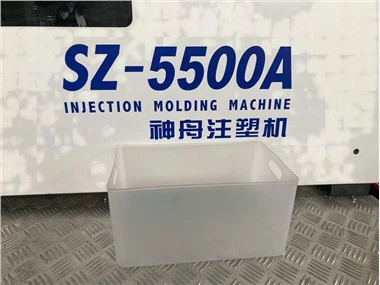 Plastic Box Storage For Clothes Injection Making Molding ...Medium storage box, 40cm high, 50cm long, 30cm wide, for storing clothes, shoes, underwear,Add to Inquiry
 -
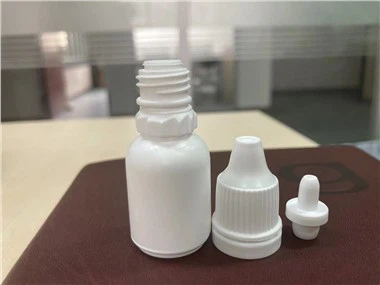 Plastic 10ml 5ml 15ml Medical Squeeze Bottle Eye Dropper ...Products Description Eyedrop bottle Ophthalmic lids belong to the pharmaceutical packaging of massAdd to Inquiry


- Tel: +86-512-58451000
- Mob: +86-13601562785
- Email: cch@shenzhoumac.com
- Add: Fenghuang Town, Zhangjiagang City, Jiangsu Province, P.R.China
Injection Molding Machine is the main molding equipment that makes thermoplastic or thermosetting plastics into plastic products of various shapes with plastic molding molds. It is divided into vertical type, horizontal type and all electric type. The injection molding machine heats the plastic and applies high pressure to the molten plastic to make it shoot out and fill the mold cavity. The injection device and the mold locking device are on the same vertical centerline, and the mold is opened and closed along the up and down direction. Its floor area is only about half of that of the horizontal machine. Therefore, the productivity converted into floor area is about twice.
Injection Molding Machine adopts the machine type with fixed lower formwork and movable upper formwork. If the belt conveyor is combined with the manipulator, it can easily realize full-automatic insert molding. The weight of the mold is supported by the horizontal formwork to open and close up and down, which will not cause the front fall caused by the gravity of the mold similar to the horizontal machine, so that the formwork cannot be opened and closed. It is conducive to maintaining the accuracy of machinery and die for a long time.

An injection molding machine (also spelled as injection moulding machine), also known as an injection press, is a machine for manufacturing plastic products by the injection molding process. It consists of two main parts, an injection unit and a clamping unit. Injection molding machine molds can be fastened in either a horizontal or vertical position. Most machines are horizontally oriented, but vertical machines are used in some niche applications such as insert molding, allowing the machine to take advantage of gravity. Some vertical machines also do not require the mold to be fastened.
Working of injection molding similar to extrusion and it works like an injection as name suggest. Molding material/ raw material pour into the hopper by feeding device. After that molding material goes down under the action of gravity into the cylinder (barrel). A circumferential heater which is located on the barrel is used to melt the material. When powder form of molding material goes dawn into the barrel from hopper it starts melting and a hydraulic ram or rotating screw pushes the material forward into the mold by applying some pressure. Molten plastic material is injected into a closed mold attached on the other side of barrel; in this split mold is used. Molding material goes forward continuously by the rotating screw. Pressure applies by the hydraulic system. Injection pressure is generally 100-150 MPa. After injection; pressure is applied for some time or locked at same position with some force. After the whole process is done the parts manufactured is cooled sufficiently. Then mold is open and some ejectors are used for proper removal of the part without damage. After removing the part mold is closed again. This process is very fast and automatically repeated. Here complex shape parts can be easily manufactured. Production capacity of injection molding is 12-16 thousand parts per cycle.
Benefits of Injection Molding Machine
Complex Geometries
Injection molding machine allows for large volumes of uniform, complex parts. However, you must pay attention to vent and gate placements, weld lines, corner transitions, wall thickness, rib and boss design, and more to ease ejection and achieve precise parts. With injection molding machine, you can easily achieve repeatable part tolerances of ± 0.500 mm (0.020’’). In some cases, you can even produce parts with tolerances of ± 0.125 mm (0.005’’), giving you parts that are accurate enough for most applications and comparable to 3D-printed or CNC machined parts.
Wide Range of Materials and Colors
Today, there are over 25,000 engineered materials that are compatible with injection molding machine, including thermoplastics, thermosets, resins, and silicones. With all of these options, you’ll be able to find one that offers the right balance of physical, mechanical, and chemical properties. Commonly used materials include acrylonitrile butadiene styrene (ABS), polyethylene (PE), polystyrene (PS), and polypropylene (PP). You can also use a mixture of materials to produce a part with the strength, impact resistance, or stiffness you need. For example, you might add glass fibers to your thermoplastic to create a strength-enhancing composite.


High Repeatability and Reliability
One of the main benefits of plastic injection molding machine is its high repeatability. Once you’ve created your mold, you can produce thousands of parts before needing to maintain your tooling. An aluminum mold will generally last between 5,000 and 10,000 cycles, and a full-scale steel production mold can last for over 100,000 cycles. Plus, since injection molding uses the same mold for each part, you’ll have identical products.
Efficient
While it can take several minutes - or even hours - to 3D print or CNC machine a single part, most injection molding cycles only last 10 to 60 seconds. Even if you have a complex geometry that takes around 120 seconds to mold, you can include several smaller parts in one larger mold. This helps maximize efficiency and gets the most out of each mold, allowing you to create hundreds of identical parts an hour at a low cost.
Hydraulic Injection Molding Machine
A hydraulic injection molding machine uses hydraulic pressure to operate the machine. The hydraulic system consists of a hydraulic pump, a motor, a hydraulic cylinder, and valves. The hydraulic pump supplies high-pressure hydraulic oil to the hydraulic cylinder, which then drives the screw to inject molten plastic into the mold cavity. These machines are popular due to their ability to provide high clamping force and the flexibility of the hydraulic system. They are commonly used in industries where the production volume is high, and the cost of production is not a significant concern.
Electric Injection Molding Machine
An electric injection molding machine uses an electric motor to operate the machine. These machines are more energy-efficient than hydraulic machines because they don't require the use of hydraulic oil. Instead, they use electric motors to drive the screw, injecting molten plastic into the mold. Electric machines are known for their high precision, repeatability, and speed. They are ideal for producing small to medium-sized parts with high accuracy and consistency.
Hybrid Injection Molding Machine
A hybrid injection molding machine combines the advantages of hydraulic and electric machines. They use hydraulic systems for clamping force and electric systems for the injection process. These machines are energy-efficient and provide high precision, speed, and flexibility. They are commonly used in industries where a high level of precision and accuracy is required.
Two-Shot Injection Molding Machine
A two-shot injection molding machine is a type of machine that can produce two different types of plastic parts in one cycle. It has two injection units that can inject different types of plastic material into the mold simultaneously. This machine is ideal for producing complex parts with different colors, materials, or textures.
Multi-Shot Injection Molding Machine
A multi-shot injection molding machine is a type of machine that can produce multiple parts in one cycle. It has multiple injection units that can inject different types of plastic material into the mold. This machine is ideal for producing complex parts with different colors or materials.
Vertical Injection Molding Machine
A vertical injection molding machine has a vertical clamping unit and an injection unit that is mounted vertically. This machine is ideal for producing parts with inserts or overmolding. It is commonly used in industries where space is limited.
Gas Injection Molding Machine
A gas injection molding machine is a type of machine that uses gas to assist in the injection molding process. The gas is injected into the mold cavity to help the plastic material fill the mold. This machine is ideal for producing parts with a hollow center or requiring high dimensional accuracy.
Liquid Silicone Injection Molding Machine
A liquid silicone injection molding machine is a type of machine that is used to produce silicone parts. The machine injects liquid silicone into the mold cavity, which is then cured to form a solid part. This machine is ideal for producing parts with high heat resistance, durability, and biocompatibility.
Micro Injection Molding Machine
A micro-injection molding machine is a type of machine that is used to produce small and precise parts. Injection molding machines are known for their exceptional accuracy and repeatability, which make them the preferred choice for manufacturing parts with intricate geometries and precise tolerances. They are widely used in a range of industries, including electronics and medical devices.
Powder Injection Molding Machine
A powder injection molding machine is a type of machine that is used to produce parts from metal or ceramic powders. The powders are mixed with a binder and injected into the mold cavity. After the part is formed using a specialized injection molding process, it is sintered to remove the binder and fuse the powders. This results in part with high strength and complex geometries. The powder injection molding machine is an excellent option for producing such parts and is widely used in industries such as aerospace and automotive.
Applications of Injection Molding Machine
Construction
Injection molding various construction and building components is becoming increasingly popular due to the innate versatility of plastic injection molding. Some of the most commonly-produced elements in the construction industry include small and large accessories, fasteners, and various hand tools.
Food Industry
Parts used in the food and beverage field must follow stringent health and safety rules and regulations, such as the GMA-safe program and FDA certification. All this is necessary to ensure the well being of individuals using such products. To abide by the aforementioned standards, molded parts have to be BPA-free and completely non-toxic.
Medical Industry
Similarly to the food and beverage industry, plastic parts made for the medical and pharmaceutical field have to follow even more stringent guidelines. In order to meet those standards, manufacturers must use FDA or medical-grade resins and manufacture their components according to ISO certification. What’s more, components for the medical field require various chemical properties, such as high tensile strength, resistance to very high temperatures, and others.
Decorative and Functional Components
These components have to be both decorative and functional, which means the manufacturer has to achieve the balance between aesthetics, usability, and durability. The components you can create through plastic injection molding are so varied it’s difficult to name the most common ones. Some of the frequently used parts are product stops, hooks for pegboards, shelf dividers, but also many more.
Automotive Components
Due to its innate design flexibility, but also high durability and longevity, plastic injection molded parts are very frequently used in the automotive industry. This process makes it easy to design and create various items you find in and on your car every day, such as mirror housings, cup holders, bumpers, but also entire dashboards.
Components of Injection Molding Machine
We slide it into a few main parts of the injection machine for easier understanding: the clamping unit, injection unit, electronic unit, hydraulic system, and projection guard parts. These parts are named by their functions on a plastic injection molding machine.
Clamping Unit
The clamping unit’s function is to hold the plastic mold and offer the clamping force for mold holding pressure when the molten plastic is injected into the mold.
Injection Unit
The injection unit’s function is to melt the granule plastic mixed with colorant and inject it into the plastic injection molding mold. The electronic unit is the control system of the injection plastic machine, you can think of it as the brain of the machine and offer the interface to humans.
Hydraulic System
The hydraulic system turns the power from the electric motor to the mechanism moving, it`s the power supply chain on a plastic molding machine.
Protection Guard
The protection guard is used to protect the machine from damage and keep humans safe from the machine movement and accidents.
Maintenance Tips For Injection Molding Machine
When you start your inspections, you need to know what you’re looking for so you can identify the issues. It’s not possible to list every issue that could occur, but you can keep an eye out for the common signs of issues and quickly resolve them as a part of your preventative maintenance.


Movement Wear
Any moving parts may break down frequently, as movement causes a lot of stress and wear on the device. It’s a good idea to check all the moving parts for any wear and damage. Pay particular attention to the joints and any part that comes into contact with another object or part, as those will suffer more wear.
Ejector Pins
When it comes to injection molding, the ejector pins are extremely important. They remove the product from the mold once it’s done solidifying into the correct shape. However, this can cause a lot of wear on the pins as they slide and push against the various parts of the machine. So, focusing your attention on the pins can make it easy to identify wear and damage.
Temperature Stress
Another common cause of damage in these larger machines is deformity and humidity from changes in temperature. Injection molding takes a lot of heat to melt and shape the plastic, which affects the nearby internal structures of the devices over time. Check your machines for any water damage, and keep an eye on the areas that withstand extreme temperatures, as they are more susceptible to damage.
The Mold
A common place for temperature damage to build up is the mold of the machine as it holds the hot plastic. Your inspections should regularly check the mold for any condensation, as well as the nearby parts for any signs of deformity caused due to temperature fluctuations.
Material Buildup
When the plastic flows through your device and into the mold, it can leave behind trace amounts of material sticking to the internal systems of the machine. This won’t cause much of an issue at first, but it can clog up your system or cause product deformity as the buildup blocks the flow of materials. This is a huge problem, but the fix is simple, as you just need to clean out all the molding and tubes of your machine.
Runners and Mold Cavities
Focus on the runners of your machine when checking for buildup, as they’ll slowly clog up as the plastic catches to the walls of the machine. You should also check your molds and clean them carefully, as plastic can easily get stuck in the cavities and cause deformities in all the products that come from that machine.
Certification
Our company is accredited for meeting international standards in management responsibility, quality control, design control, process control, customer service, and other key criteria.

Our Factory
Located in Zhangjiagang City of China, our company is near many big cities of Shanghai, Nanjing, Suzhou, Wuxi, and Nantong, with convenient traffic.


Ultimate FAQ Guide to Injection Molding Machine
Q: How to choose an injection molding machine?
Q: How big are plastic injection molding machines?
Q: How much does a plastic injection molding machine cost?
Q: Why is important to maintain injection molding machines?
Lower Costs: You should perform maintenance on your machines because it lowers the costs of production. Without proper maintenance, these injection molding machines will slowly lose efficiency as they break down. This costs you money and increases the cost per unit for every part you make from that inefficient machine.
Consistent Production: A common problem for injection molding is inconsistent production, which can occur if you don’t perform proper cleaning. Unclean machines will lead to mistakes in production and waste a lot of parts and materials over time. This costs money and resources as you need to produce more than necessary to make up for all the mistakes.
Reduced Downtime: Another major benefit of proper maintenance of your machines is less downtime for your production. When a machine breaks down and stops working, you need to stop production to replace or repair the device. This can cause days of lost production time as you wait for replacement parts, when you could have prevented the delay by performing proper maintenance in the first place.
Q: How is the mold clamped in an injection molding machine?
Q: Can injection molding machines produce multi-material or multi-color products?
Q: What is the role of the hydraulic system in an injection molding machine?
Q: What is the importance of temperature control in injection molding?
Q: Can injection molding machines handle high-volume production?
Q: What is the role of the injection unit in the machine?
Q: Are there considerations for designing molds for injection molding?
Q: Can recycled plastics be used in injection molding?
Q: What are the major factors affecting an injection moulding process?
Q: How are quality and consistency maintained in injection molding?
Q: Can injection molding machines produce large and complex parts?
Q: What safety measures should be followed when operating injection molding machines?
Q: How is the cooling process managed in injection molding?
Q: What is the role of mold release agents in injection molding?
Q: What types of products can be produced with injection molding machines?
Q: What materials are commonly used in injection molding?
Q: How does the injection molding machine work?
Q: What are the functions of injection units in an injection molding machine?
We're well-known as one of the leading injection molding machine manufacturers and suppliers in China. We warmly welcome you to or wholesale customized injection molding machine for sale here from our factory. All products made in China are with high quality and competitive price.
Servo Bi-color Injection Molding Machine, pp injection molding machine, plastic injection moulding machine