

Can a Raw Material Auto Loader be used in the food industry?
In the ever - evolving food industry, efficiency, safety, and quality are of paramount importance. As a supplier of a Raw Material Auto Loader, I've often been asked whether our product can be effectively used in the food industry. In this blog, I'll explore the feasibility, benefits, and potential challenges of using a Raw Material Auto Loader in the food sector.
Feasibility of Using Raw Material Auto Loader in the Food Industry
The food industry deals with a wide range of raw materials, from grains and powders to liquids and semi - solids. A Raw Material Auto Loader is designed to automate the process of transporting raw materials from storage to processing equipment. This automation can be highly beneficial in the food industry, where large volumes of raw materials need to be handled on a daily basis.
The basic principle of a Raw Material Auto Loader is to use a vacuum or pressure system to move materials through a pipeline. This system can be adjusted to handle different types of materials, including those used in the food industry. For example, it can be equipped with appropriate filters and conveyors to ensure that the materials are handled gently and without contamination.
Benefits of Using a Raw Material Auto Loader in the Food Industry
1. Efficiency
One of the most significant advantages of using a Raw Material Auto Loader in the food industry is increased efficiency. Manual handling of raw materials is not only time - consuming but also prone to errors. With an auto loader, the process of loading raw materials into processing equipment can be completed much faster. For instance, in a large - scale bakery, an auto loader can quickly transfer flour from storage silos to mixers, reducing the time between batches and increasing overall production output.
2. Hygiene and Safety
Maintaining high levels of hygiene is crucial in the food industry. A Raw Material Auto Loader can help achieve this goal. Since the materials are transported through a closed pipeline system, there is less exposure to the external environment, reducing the risk of contamination from dust, insects, or other foreign objects. Additionally, the auto loader can be made from food - grade materials, ensuring that it meets the strict safety standards of the food industry.
3. Precision
Auto loaders can be programmed to dispense precise amounts of raw materials. This is particularly important in the food industry, where accurate ingredient ratios are essential for product quality and consistency. For example, in a beverage production plant, an auto loader can accurately measure and load the right amount of sugar, flavorings, and other ingredients into the mixing tanks, ensuring that each batch of the beverage tastes the same.
4. Labor Savings
By automating the raw material loading process, companies can reduce their labor requirements. This not only saves on labor costs but also allows employees to focus on more skilled tasks, such as quality control and equipment maintenance.
Potential Challenges and How to Overcome Them
1. Material Compatibility
Some food raw materials may have unique properties that could pose challenges for an auto loader. For example, sticky or powdery materials may clog the pipeline or cause wear and tear on the equipment. To overcome this, the auto loader can be designed with special features, such as anti - clogging devices and self - cleaning mechanisms. Additionally, the pipeline can be coated with materials that reduce friction, making it easier for the materials to flow.
2. Cleaning and Maintenance
Regular cleaning and maintenance are necessary to ensure the proper functioning of the auto loader and to maintain hygiene standards. However, disassembling and cleaning a complex auto loader system can be time - consuming. To address this issue, modern auto loaders are designed with easy - to - clean components and quick - release mechanisms. Some models also come with automated cleaning programs, which can significantly reduce the time and effort required for maintenance.
Related Equipment in the Food Industry
In addition to the Raw Material Auto Loader, there are other pieces of equipment that can work in conjunction with it to enhance the overall efficiency of the food production process. For example, a Raw Material Hopper Dryer can be used to dry raw materials before they are loaded into the auto loader. This is especially useful for materials that are prone to moisture absorption, such as grains or powders.

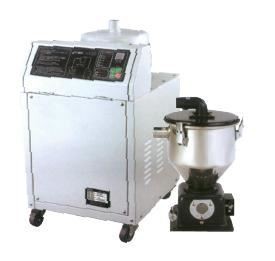
Another related piece of equipment is the Plastic Products Crusher. Although it may seem unrelated at first glance, in some food production processes, plastic packaging materials may need to be recycled or processed. A plastic products crusher can break down these materials into smaller pieces, which can then be reused or disposed of more easily.
Conclusion
In conclusion, a Raw Material Auto Loader can indeed be used in the food industry, offering numerous benefits in terms of efficiency, hygiene, precision, and labor savings. While there are some potential challenges, these can be overcome with proper design and maintenance. If you are in the food industry and looking to improve your raw material handling process, I encourage you to consider our Raw Materail Auto Loader.
If you have any questions or would like to discuss how our Raw Material Auto Loader can be customized to meet your specific needs, please feel free to reach out. We are always ready to assist you in finding the best solution for your food production operations.
References
- "Food Industry Automation: Trends and Technologies" - Journal of Food Science and Technology
- "Hygiene Standards in Food Processing Equipment" - International Journal of Food Safety and Quality


